dialectcoffee
26006_DoubleWashed_FieldBlend_KianduFactory_Kenya (NL)
26006_DoubleWashed_FieldBlend_KianduFactory_Kenya (NL)
Couldn't load pickup availability
for the_narrative:
Kiandu Factory’s double washed-processed field blend of SL(28,34), ruiru(11) and batian cultivars.
a kenyan coffee that delivers the classic kenyan blackcurrant and grapefruit, yet presents with more silky, lychee florals than your average caramelised grapefruit.
with this, we return to roasting on the typhoon. 5kg batches in a 20kg roaster gets the coffee roasted using fluid bed technology in 3 mins - much faster than almost any other roasting technology. this incurs rapid heat transfer, developing the perfect acidity, whilst minimising pyrolysis to extract pure blackcurrant juice into your cup*
*heat transfer description is true, alchemy of turning coffee into blackcurrant juice is…well, i was almost convinced.
for source_data:
# traceability
id = 26006
# genetics
species = arabica
cultivar = SL(28,34), ruiru(11), batian
# process_intervention
process = double washed
# farming, production & supply
washing_station = kiandu factory
region = nyeri county
origin = kenya
supply = nordic approach
for sensory_profile:
# attributes and intensities
acidity: low ------------:)----- high
fruitiness: low -----------:)----- high
# descriptors
descriptor{1} = blackcurrant
descriptor{2} = lychee
# flavour window
window.start = 2 weeks post-roast
window.end = 6 weeks post-roast
for transformation_data:
# roasting conditions
roaster = typhoon 20kg
batch size = 5kg
protocol = constant_power(80%)
end condition = 204oC
response.metric = 9.5% mass loss
for process_specificity:
# cultivar
this coffee is a blend of four cultivated varieties that are grown in the region. SL(28,34) are two cultivars developed by Scott Labs (SL) in the 1930s, delivering the infamous blackcurrant/tomato/grapefruit flavours. ruiru(11) is a complex hybrid bred quickly in response of a coffee berry disease outbreak that had a significant impact on kenyan coffee production in the 1970s - the cultivar contributes flavours of citrus and apple to the cup. the batian cultivar was bred to succeed ruiru(11), with similar resistance to coffee berry disease, yet delivering the renowned blackcurrant and peach flavours in the cup.
# processing
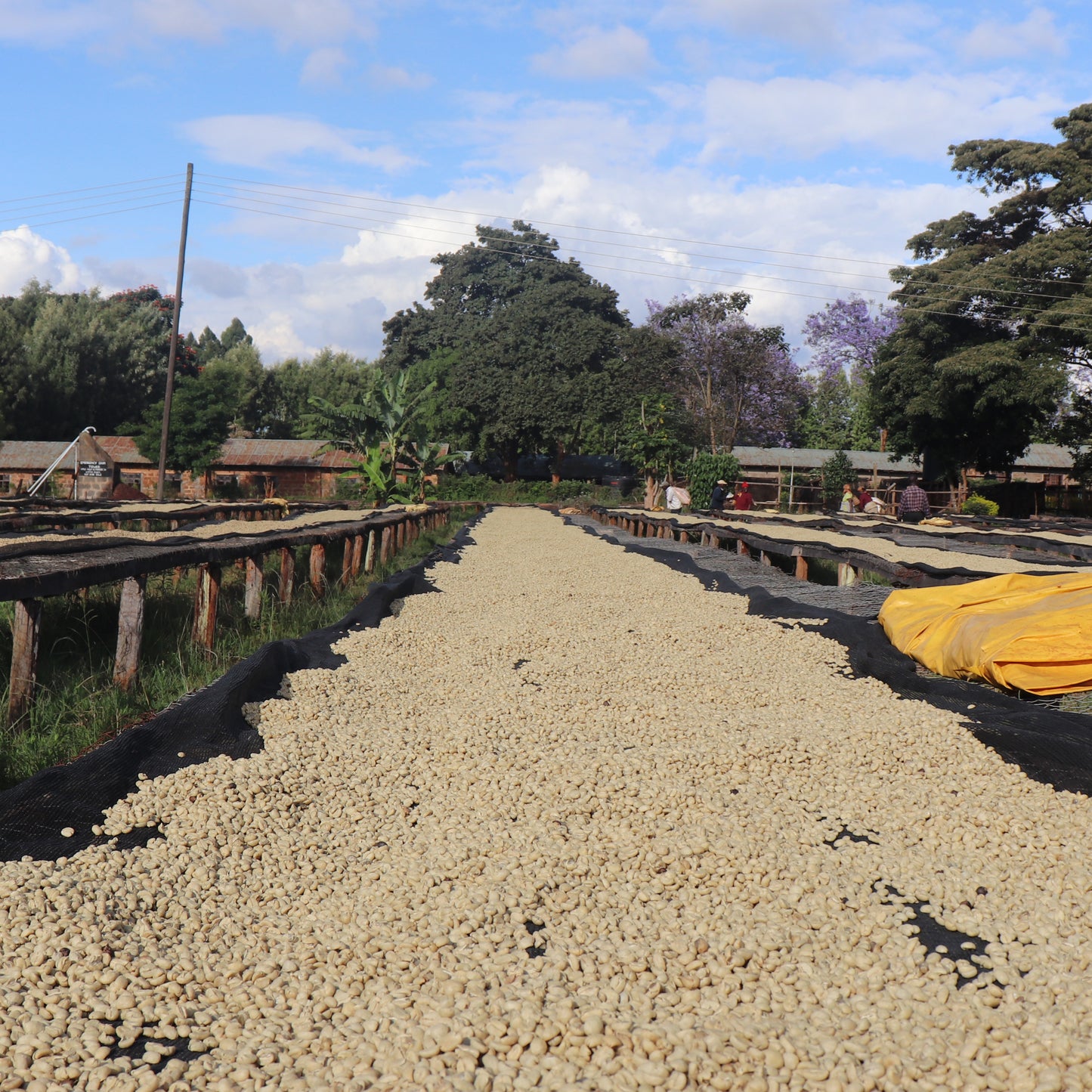
ripe cherries are harvested from several growers in the region and collected at the kiandu washing station. cherries are milled to remove the outer skin and fruity pulp, then placed in fermentation tanks for 18-24 hours to degrade the sticky mucilage layer. the coffee is transferred through water channels to wash off residual pulp and mucilage and is stored overnight, submerged in a secondary tank. this submerged storage gives the process its name "double washed". the following day, parchment coffee is laid out on raised beds made of mesh and is dried for 7-15 days. the parchment coffee is finally sent to the regional dry mill and bagged ready for export.
# washing station
kiandu factory [located at -0.490830, 36.966390] is managed by the kiandu farmers' cooperative society in karundu, nyeri county in kenya. the factory has been operating since 1970, with approximately 1500 smallholder farmers who are each responsible for up to 200 coffee trees, or 1 acre of land. the factory sits at 1800 metres above sea level (masl), although the farms where the coffee is grown could range 1700-1900 masl.
# origin
kenyan coffee supply relies heavily on smallholder farmers organised into cooperatives/societies that process cherry at central washing stations (or factories) for trade through national auctions or direct exports. kenyan terroir (red, nitrogen-rich volcanic soil and high elevation) and processing (double washed fermentation and soaking) are key to creating kenyan coffee’s signature flavour profile, reminiscent of blackcurrant/tomato/grapefruit.
for compliance_metadata:
# what legal told us to include
coffee_species = arabica
bag.contains = 200 g
# whole beans
Coffee is sold as whole beans (not ground). Coffee will be fulfilled and shipped out within 1 week after ordering and not more than 4 weeks after roasting at the time of fulfilment.